La Michoacana haven’t published calories for its shop food, because the name belongs to many separate shops that each make their own recipes in their own portion sizes.
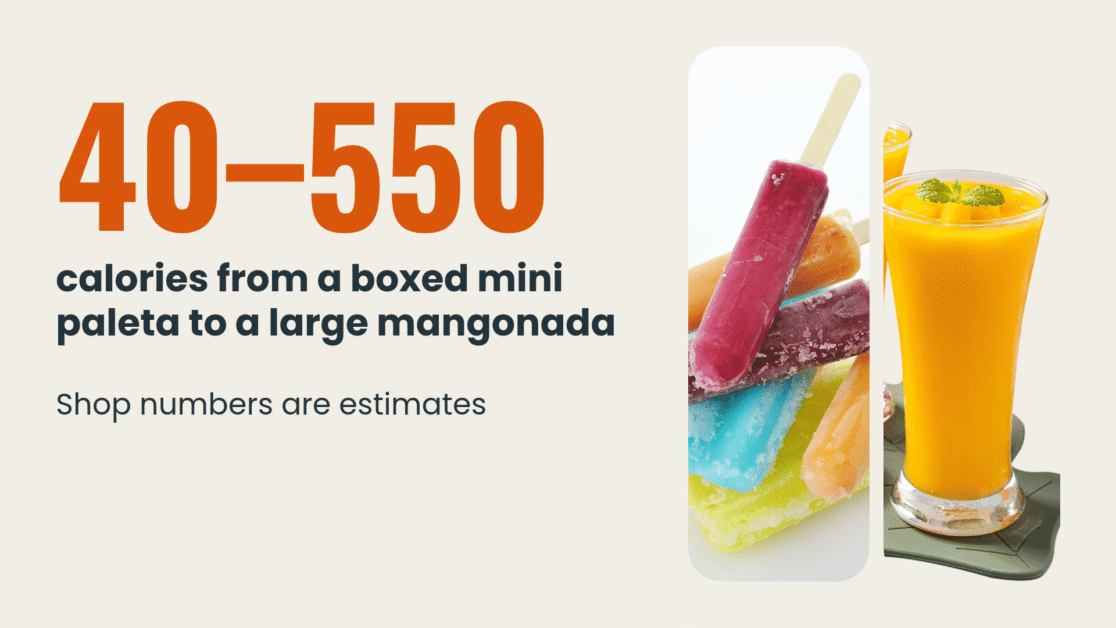
Only the boxed paletas from the grocery freezer carry a nutrition label, and those range from 40 to 220 calories per bar.
So for everything else I worked out the numbers myself. I checked multiple home recipes, looked at the labels of the ingredients that go into each item (sorbet, chamoy, cotija, mayo and cream) and added them up for the portion sizes shops usually serve.
These are approximate numbers to give you an idea, not lab results, and your shop’s cup could land a little above or below.
La Michoacana calories
| Item | Approximate calories | Based on |
|---|---|---|
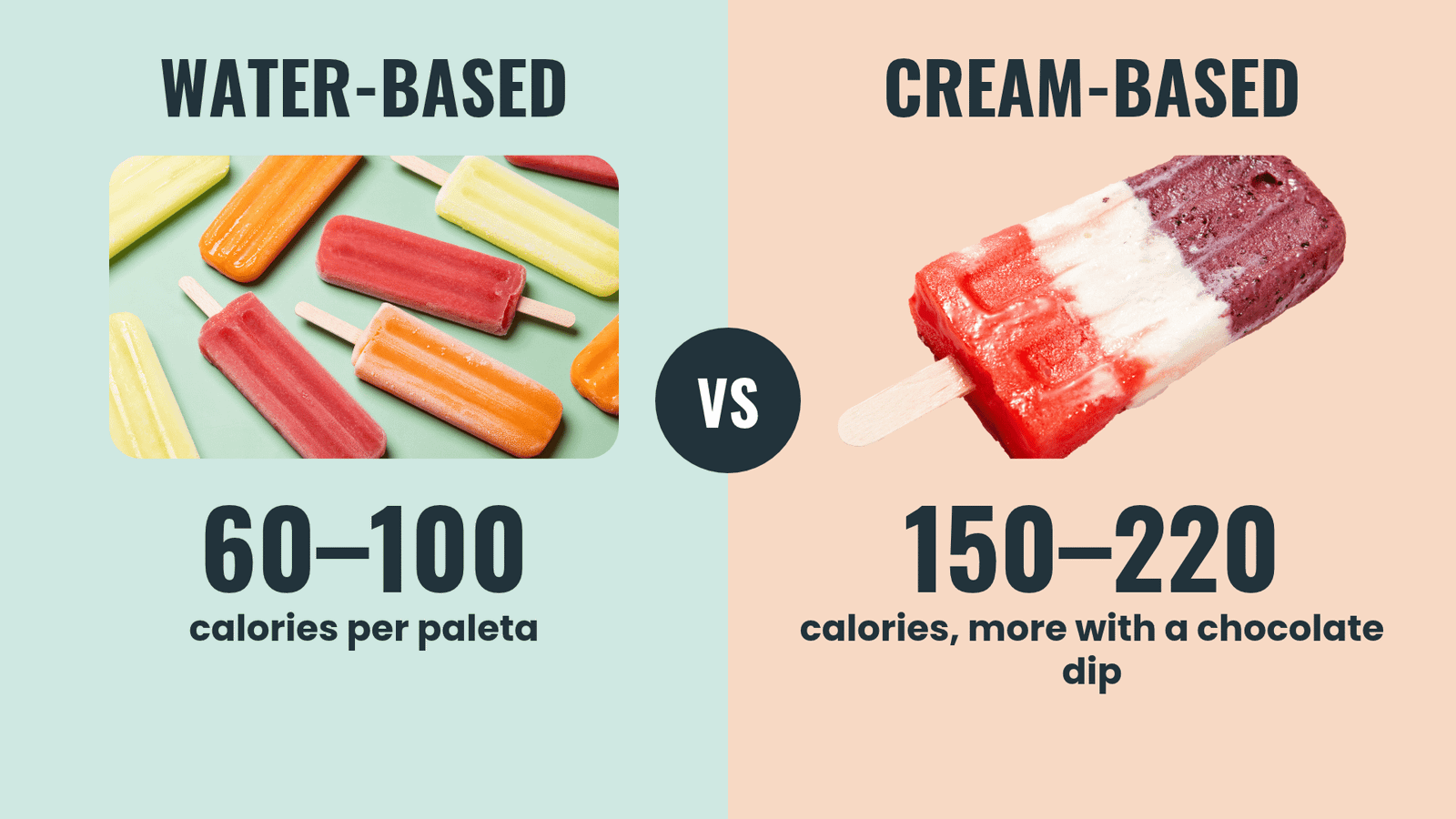
| Water-based paleta (shop) | 60 to 100 | Boxed fruit bars with labels |
| Cream-based paleta (shop) | 150 to 220 | Boxed cream and rice pudding bars |
| Small mangonada | 200 to 250 | One scoop of sorbet, mango pieces, chamoy |
| Medium mangonada | 300 to 400 | About a cup of sorbet plus toppings |
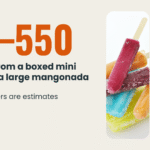
| Large mangonada | 450 to 550 | Close to two cups of sorbet plus toppings |
| Fresas con crema, small | 200 to 250 | Home recipes at 208 to 331 per cup |
| Fresas con crema, medium | 300 to 350 | Same recipes, a bigger cup |
| Esquites, small | 200 to 300 | Corn, mayo, cotija and butter added up |
| Esquites, large | 350 to 500 | The same cup, roughly doubled |
| Elote on the cob | 350 to 400 | Ear of corn, mayo and cotija |
Why you won’t find official numbers
A chain with one kitchen and one recipe can print a label on its menu, but La Michoacana can’t, since one shop makes its mangonada with mango sorbet and the next uses mango ice cream, one puts two spoons of mayo on the corn, and another puts one, and the cups come in different sizes at every counter.
Even Premium and Plus, which are chains, say flavors and products vary by store, so there is no single number to print.
That’s why a calorie figure you see for “a La Michoacana mangonada” should make you a bit careful. It’s a guess about a drink that is made a little differently at every shop.
Boxed paletas, where the labels are real
| Product | Size | Calories |
|---|---|---|
| Minis with chamoy (pineapple, lime, mango) | 1.5 oz bar | 40 |
| Mango chamoy fruit bar | full-size bar | 60 |
| Organic agua fresca paleta | 74 g | 60 |
| Mini variety (coconut, strawberry, mango) | 1.75 fl oz bar | 90 |
| Chocolate-dipped mini (banana, coconut, strawberry) | 44 g | 120 |
| Rice pudding paleta (arroz con leche) | 113 g | 220 |
Water-based fruit bars stay under about 100 calories, and the creamy ones climb fast because of milk fat, with the chocolate-dipped mini reaching 120 calories at less than half the weight of the rice pudding bar.
In other words, a chocolate dip adds more than you would guess for such a small bar.
If you track closely, the rice pudding paleta is the one to look at, since it has 10 g of fat (7 g saturated), 30 g of carbs and 21 g of sugar. On the other hand, the chamoy minis are dairy-free and have no fat to speak of, so they make the best choice when you want a treat that won’t eat up much of your day.
I used these bars as the yardstick for shop paletas, because a shop stick is close to the same size.
A fruit paleta at a counter should land between 60 and 100 calories, and a cream-based one between 150 and 220, with a chocolate dip adding more on top.
If you want help picking between the two types, the La Michoacana paleta flavors list sorts the flavors into water-based and cream-based.
How I calculated a mangonada
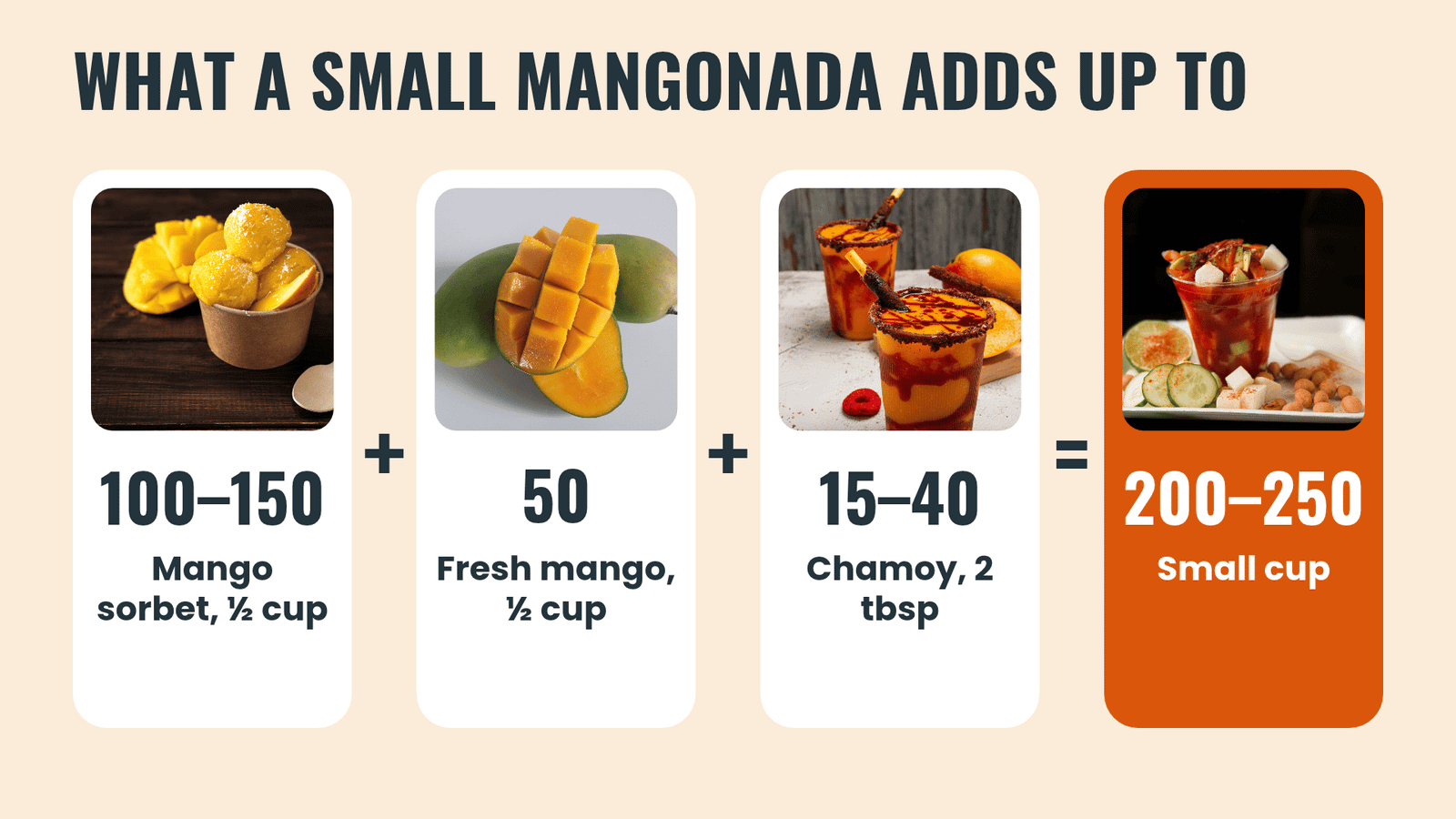
Three parts of a mangonada carry the calories: the frozen base, the fresh mango pieces and the chamoy.
Across the mango sorbets I looked at, a half cup comes to 100 to 150 calories, fresh mango pieces add about 50 for a half cup, and chamoy runs 15 to 40 calories for two tablespoons on the bottled labels, though homemade versions are closer to 30 to 50 a tablespoon. Tajín has none, and the tamarind candy straw adds a little more.
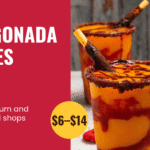
Put together, a small cup with one scoop of sorbet works out to about 200 to 250 calories, a medium with roughly a cup of sorbet lands at 300 to 400, and a large with close to two cups goes from 450 to 550.
As a cross-check, home recipes for a 10 ounce mangonada come to 282 calories and others between 254 and 344, which sits right inside the medium range.
Besides this, a shop that uses mango ice cream instead of sorbet will add some fat and more calories, and a Supreme adds a whole paleta on top, which is another 60 to 220 depending on the flavor.
The sugar is the real story here, because one 192 calorie home version had 41 g of sugar, which is most of what is in the cup.
Remember that Chamoy has around 720 mg of sodium in two tablespoons on one label and 900 mg in 30 g on another, and the Tajín adds more, so a mangonada is a salty drink as well as a sweet one. You can see how the sizes are priced in the La Michoacana mangonada price guide.
How I calculated fresas con crema
Fresas con crema is strawberries in sweet cream, and the cream decides the number.
Home recipes made with heavy cream and sour cream come to 208 calories for a cup, and those made with sweetened condensed milk and evaporated milk reach 331 for a cup. A packaged strawberries and cream dessert of 113 g comes to 240 calories.
So a small shop cup should be around 200 to 250 calories, a medium 300 to 350, and a large 400 to 500, since shops lean sweet and creamy.
If your shop sells a large cup of it, that is a dessert you could split between two people.
How I calculated esquites and elote
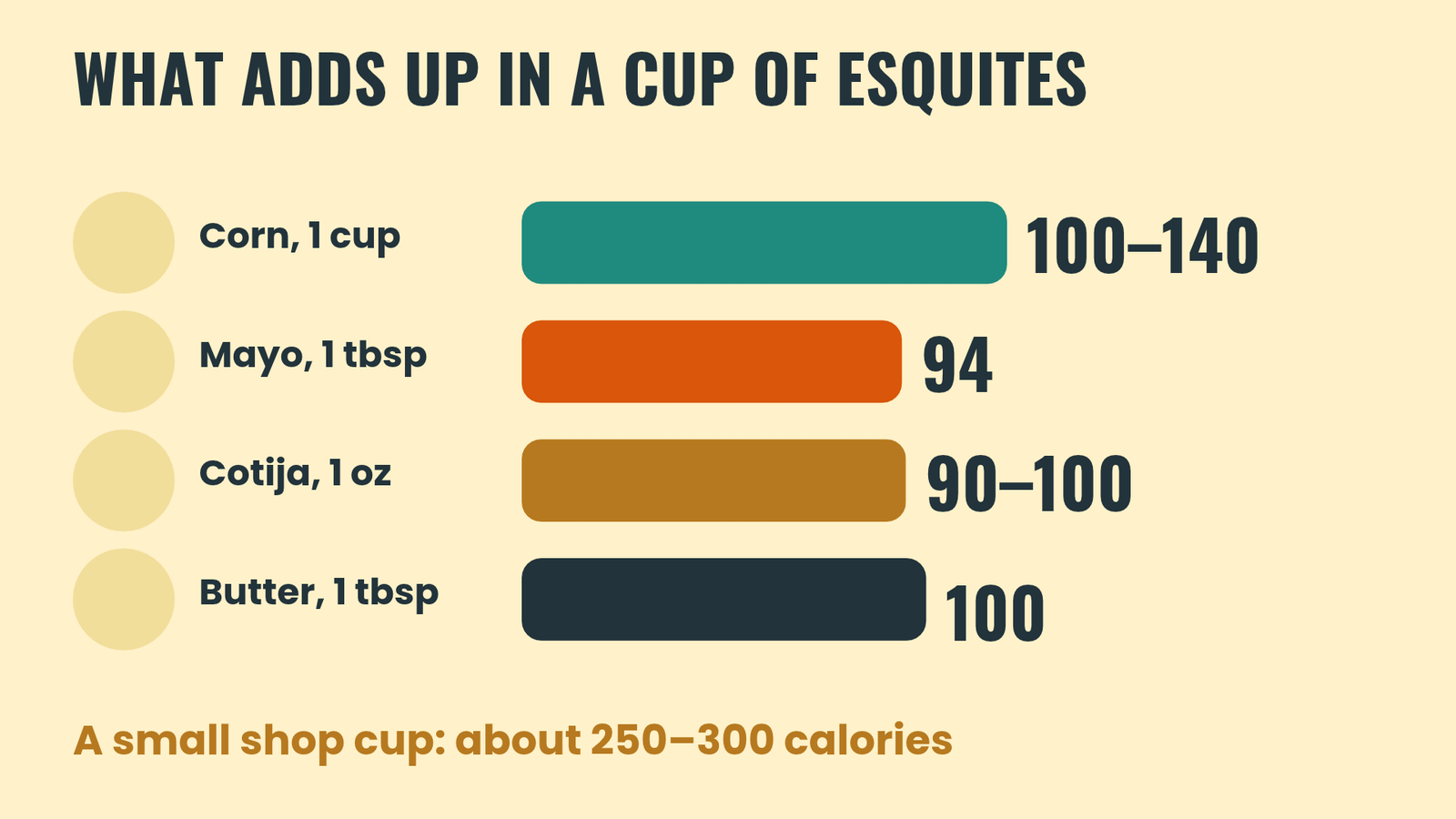
The corn is the cheap part. A cup of corn is about 100 to 140 calories depending on how it’s cooked, while a store-bought cup of roasted corn with cotija and cream comes to 180 and another reference puts a cup of esquites at 180 with 9 g of fat.
The rest comes from the toppings: mayo is about 94 calories a tablespoon, cotija is 90 to 100 an ounce, and a tablespoon of butter is around 100.
A small shop cup with about three quarters of a cup of corn, a tablespoon of mayo, half an ounce of cotija and a little butter adds up to roughly 250 to 300, and home recipes run lighter at 92 to 180 because they use less mayo.
A large cup is close to double, so 350 to 500. An elote on the cob with mayo and cotija is around 350 to 400, and one tracked version came to 400 with 29 g of fat.
Hot Cheetos or nacho cheese on top add fat and salt beyond these numbers, which is something to know before you order the loaded cup in the La Michoacana elote guide.
Snacks like tostilocos, nachos and churros
I’m not going to put a single number on tostilocos, because the bag of chips, the pickled pork skin, the peanuts, the tamarind candy, the chamoy and the sauces change from shop to shop and I couldn’t find a reliable base for the whole bag.
What I can say from the ingredients is that it’s a chip bag with a lot of salt, a lot of fat from the peanuts and chips, and sugar from the candy and chamoy, so I’d treat one as a meal and not a snack.
Churro sundaes and Dubai chocolate desserts belong in the same group, since they stack fried dough, ice cream and sauce.
How to eat lighter at La Michoacana
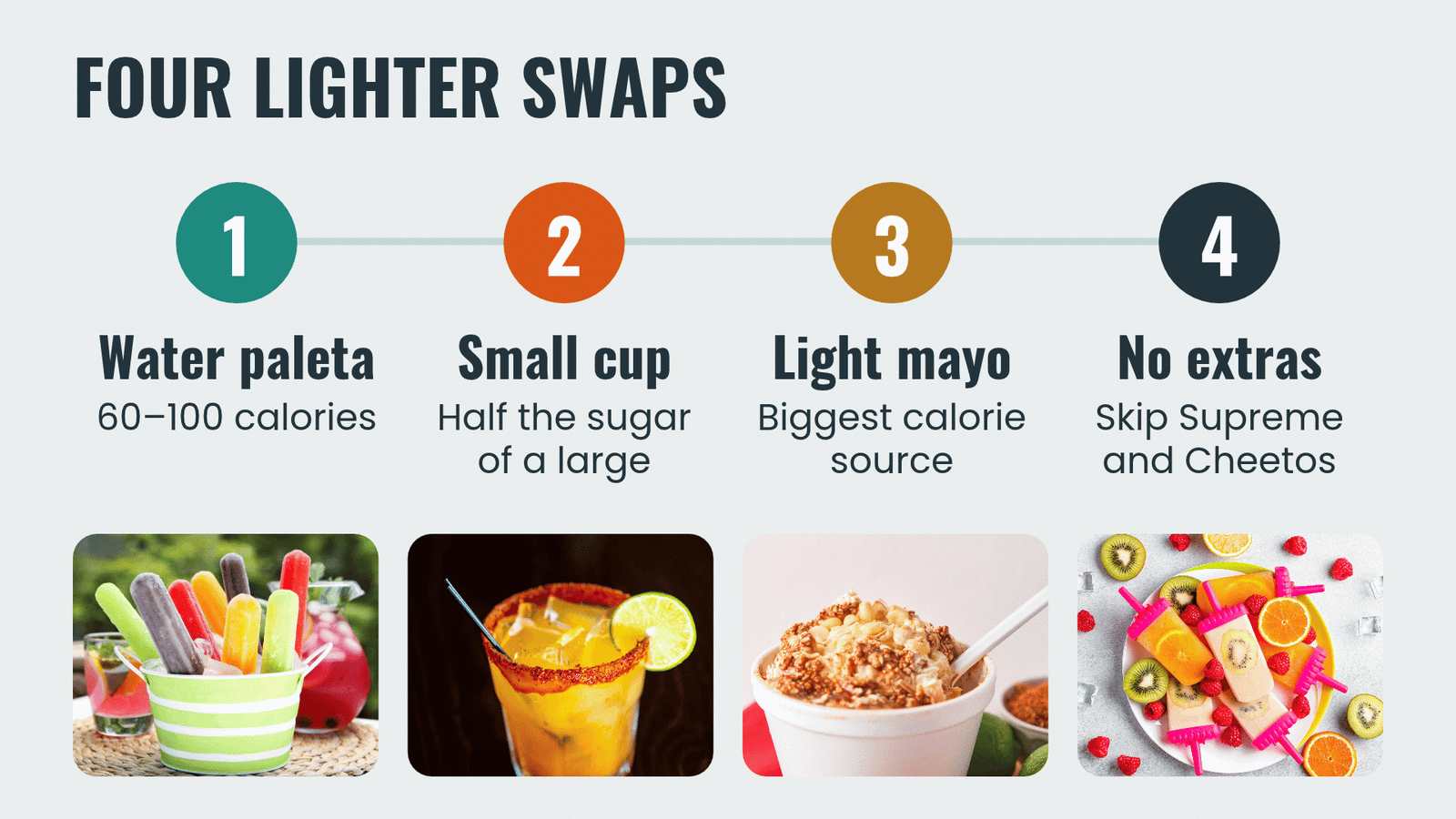
- Choose a water-based paleta: It’s the lowest-calorie item in the case, at 60 to 100 calories, and it tastes like a full treat.
- Go small on the mangonada: The sugar is in the sorbet and chamoy, and a small cuts it by half compared with a large.
- Ask for less mayo on esquites: The mayo is the biggest calorie source in the cup, so a lighter spoon changes the number more than anything else.
- Skip the extras on top: A Supreme adds a paleta and a Hot Cheetos topping adds fat, so leave them off if you’re counting.
Tip: If you count calories closely, buy the boxed paletas, because they are the only ones with a printed label, and the numbers for shop items in my guide are estimates built from ingredients.
I’m a self-taught home cook who turns everyday ingredients into comforting, café-style recipes. I test everything in my own kitchen (sometimes more than once), tweak flavors how I like them, and share only what I actually enjoy.
Most of my recipes are chocolate-based or have a creative twist, and I keep them preservative-free, beginner-friendly, and fun to make.
If you love cozy drinks, healthier desserts, or bold flavor combos — you’re in the right place. [Read full story]