
It is very easy to keep sliced cheese fresh. You only need to understand what causes that dryness, cracked edges, and weird rubbery texture.
The quickest answer? You need to control moisture, air exposure, and temperature with a few very small habits.
These five tricks below are exactly what I personally do, and they will help your sliced cheese stay soft, moist, flavorful, and perfectly snack-ready for days—without wasting expensive cheese.
1. Wrap Each Slice Properly (This One Change Fixes 80% of Dryness)
The biggest reason sliced cheese dries out fast is that people keep it in the plastic it originally comes in.
That packaging is meant for transport, not for long-term storage.
If you want your cheese slices to actually stay fresh, juicy, and soft, then the first step is to give them the right wrapping.
Here’s what I personally do every time:
- Separate each slice gently (don’t tear or stretch them)
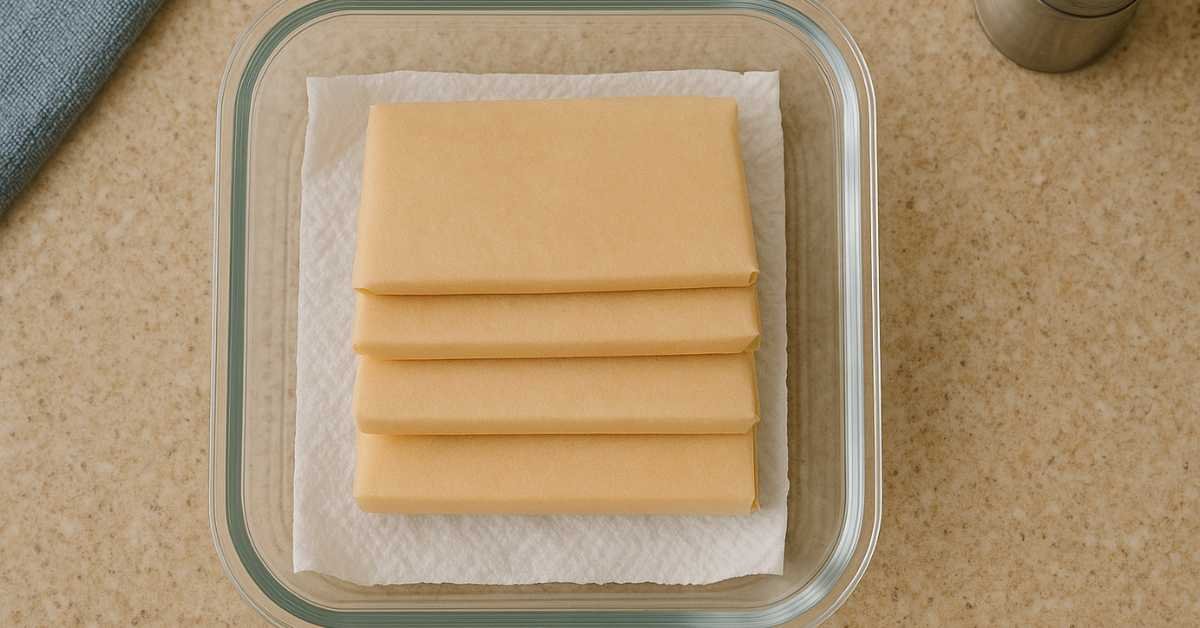
- Wrap slices loosely—but fully—in parchment paper or wax paper
- Place those wrapped slices into a zip bag or an airtight food-storage container
This layering method keeps the cheese from sticking together, reduces moisture loss, and prevents refrigerator air from pulling out natural fats.
You can even place a tiny folded paper towel inside the container to catch condensation. It will stop slices from becoming soggy.
If you’re already keeping fresh foods properly, you probably know how much packaging affects freshness.
For example, I sometimes use the same trick I use for pasta to prevent it from drying out, where controlling moisture makes all the difference.
Note: Proper wrapping = dramatically longer shelf-life for sliced cheese.
2. Keep Cheese in Its Own Airtight Zone (Never Let It Sit Open in the Fridge)

Cheese absorbs odors like crazy, and refrigerator air dries slices faster than you think.
That’s why controlling oxygen exposure is one of the biggest “commercial-level” steps for freshness—this is the same principle used by premium cheese storage bags, vacuum sealing, and deli-grade moisture control packaging.
If you want to extend the life of your sliced cheese without buying anything fancy, here are a few things that work extremely well:
- Store slices in a dedicated airtight container
- Avoid keeping them near strong-aroma foods (onions, leftover pasta sauce, garlic, etc.)
- Push the air out completely if using a zip bag
- Use a shallow box, so slices stay flat
One mistake many people make? They just fold the original plastic and call it a day.
That plastic isn’t airtight at all, which is why cheese gets stiff by the next morning.
Personally, I keep a few fresh items in similar airtight systems—like berries, herbs, and cut apples—because I’ve learned that when moisture stays stable, freshness lasts dramatically longer.
Related read: Helpful Methods to Keep Avocados Fresh After Cutting
Note: Airtight = the best insurance for premium cheese.
3. Add the “Moisture Pad” Trick (Prevents Dry Edges and Cracking)
This one sounds too simple, but it works every single time.
I place one clean, slightly damp paper towel under the wrapped cheese slices inside the container. Not wet—just lightly moistened.
It does three things:
- Keeps humidity stable
- Stops the cheese from pulling moisture out of itself
- Prevents the edges from becoming tough and crumbly
If you’ve ever noticed how cucumbers stay crisp longer when you regulate their moisture levels, this works the same way.
Related read: Ways to Keep Cucumbers Fresh and Crunchy All Week
Premium cheeses like Gouda, provolone, Swiss, and cheddar benefit a lot from this technique, especially if you slice them yourself.
Remember: A tiny moisture pad = softer cheese for days.
4. Always Store Sliced Cheese in the “Right” Part of the Fridge

I’ve seen so many people put cheese wherever there’s space, but the fridge actually has zones, and storing cheese in the wrong zone will make it dry out or even stiffen.
Here’s exactly where you want to keep sliced cheese:
- Crisper drawer → Best for consistent humidity
- Cheese drawer (if your fridge has it) → Ideal temperature & airflow
- Upper shelf, away from the fan → Prevents rapid drying
Avoid these places:
- The back of the fridge (too cold = cheese hardens)
- The fridge door (huge temperature swings)
- Near strong-smelling foods
This matters especially when you’re storing expensive deli cheese or premium sliced cheese brands, because the wrong temperature ruins flavor.
The same concept applies to lots of fresh foods—like when storing berries or tomatoes, positioning in the fridge changes everything.
Note: Correct fridge zone = better texture + longer-lasting flavor.
5. Use the “Freshness Reset” Method Every 2–3 Days (Almost Nobody Does This)

This is something I personally started doing after realizing how premium grocers keep their cheese looking perfect all day.
Every 2–3 days:
- Remove the slices
- Replace the parchment paper (fresh layer = fresh moisture balance)
- Wipe the container dry
- Place slices back in
This resets the humidity and removes trapped moisture that could lead to sliminess.
If you’re used to keeping produce fresh for longer, you already know how much these little resets matter.
Related read: Clever Ideas That Keep Cut Apples Fresh for Longer )
This method is especially helpful if you’ve got:
- High-fat cheeses (cheddar, Muenster, Havarti)
- Thin deli slices (provolone, American, mozzarella slices)
- Pre-sliced packs that dry out quickly after opening
It’s like giving your cheese a tiny “refresh,” which keeps it from becoming dry, oily, or cracked.
Pro tip: The freshness reset is the secret behind grocery-store soft slices.
Extra Tips That Actually Make a Big Difference
Don’t Freeze Sliced Cheese Unless You Absolutely Have To
Freezing makes cheese crumbly and ruins its texture.
If you must freeze:
- Wrap slices individually
- Use freezer-safe bags
- Consume within 4–6 weeks
But honestly, refrigeration techniques above work far better if your goal is freshness and softness.
Keep Cheese Away From Airflow Vents
Fridge air vents literally blast cold air. If your cheese is near them, expect stiff, cracked slices the next day.
Choose the Right Packaging When Buying Cheese
Premium grocery stores pack their cheese in:
- Vacuum-sealed packaging
- Moisture-balanced deli paper
- Thicker wraps that prevent air exchange
If your cheese comes in flimsy plastic, transfer it immediately.
Store Cheddar and Swiss Slightly Differently
Cheddar needs a little airflow. Swiss needs higher humidity.
Use:
- Cheddar → parchment + container
- Swiss → parchment + light moisture pad
Use Re-Sealable Deli Cheese Bags for Expensive Slices
These bags maintain perfect humidity and protect against drying.
They’re the same ones used by cheese shops and delis.
A Quick Summary (So You Can Keep Your Sliced Cheese Fresh Every Single Time)
Just do these:
- Wrap slices individually
- Place them inside an airtight container
- Add a tiny moisture pad
- Keep them in the right fridge zone
- Refresh wrapping every few days
These small steps stop sliced cheese from drying out, getting stiff, or losing its creamy texture.
They also prevent waste—especially helpful when you buy premium cheese or large deli packs.
Conclusion
It’s very easy to keep sliced cheese fresh; you just have to start doing these small habits, and you’ll notice how soft, moist, and flavorful your cheese stays every single time.
The main thing is just controlling air, moisture, and temperature.
These tiny steps honestly save money too, because cheese—especially the premium sliced ones—is not cheap.
Now you already know the exact tricks I personally follow, so you won’t have to deal with dry, cracked slices again.
Just wrap them right, store them right, and give them a little refresh every few days.
That’s all it takes to keep your sliced cheese tasting fresh like the day you opened it.
FAQs
How long will sliced cheese stay fresh in the fridge?
If you use an airtight container along with parchment paper, and the right fridge zone. Your sliced cheese will stay fresh 7 to 10 days after opening.
However, premium deli slices last even longer because they have a better moisture balance.
Why does sliced cheese dry out so fast?
Because the fridge pulls out moisture, if you keep cheese in open plastic or it gets exposed to airflow, it loses natural oils and becomes stiff.
That’s why wrapping it properly and keeping air away is the most important part.
Should I still eat cheese if its edges are dried?
Yes, you can still eat it. Just trim the dry edges. But that dryness is a sign that you’re losing flavor and quality, so it’s better to use the storage methods mentioned above to prevent it.
Should I keep sliced cheese in the freezer to make it last longer?
You can, but you probably shouldn’t unless absolutely necessary. Freezing changes the texture and makes it crumbly.
If freshness and softness matter to you, stick with fridge storage and moisture control instead.

I’m a self-taught home cook who turns everyday ingredients into comforting, café-style recipes. I test everything in my own kitchen (sometimes more than once), tweak flavors how I like them, and share only what I actually enjoy.
Most of my recipes are chocolate-based or have a creative twist, and I keep them preservative-free, beginner-friendly, and fun to make.
If you love cozy drinks, healthier desserts, or bold flavor combos — you’re in the right place. [Read full story]