Every time I bake cookies—chocolate chip, oatmeal raisin, peanut butter, sugar cookies, anything—I always want them to stay soft, chewy, and fresh for the next few days.
But the truth is, cookies start losing moisture the moment they cool down.
Some harden overnight, some turn crumbly, and some feel like they came from a week-old bakery bin.
So over the years, I figured out a few easy habits that keep my cookies soft for days without adding anything weird or doing complicated tricks.
These are the exact steps I use in my kitchen, and they work whether I bake big bakery-style cookies or smaller snack cookies for the week.
Let’s get into the 7 ways that never fail me.
1. I Always Store Cookies With a Slice of Bread (Weird Trick, But It Works Perfectly)
I don’t know who first came up with this, but whoever did deserves an award.
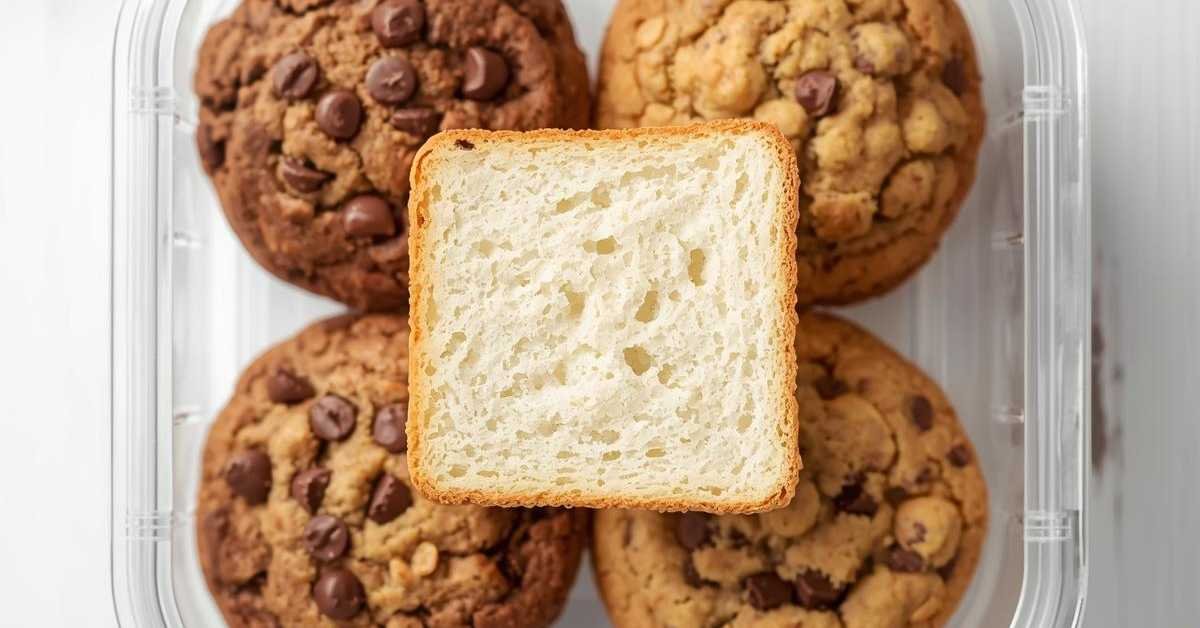
Putting a thin slice of bread inside the cookie container keeps the cookies soft for three to four days easily.
How I do it
- Put the cookies in an airtight food storage container.
- Add one slice of soft white bread on top.
- Seal its lid completely.
Why it works
Cookies slowly pull moisture from the bread—the bread dries out instead of the cookies. It keeps the texture soft without changing the flavor.
When it helps the most
- Chocolate chip cookies
- Butter cookies
- Oatmeal cookies
- Peanut butter cookies
- Soft-bake cookies
This method gives the same kind of moisture-protection vibe that I use for berries in my easy tricks to stop berries from molding so fast, where moisture control basically decides everything. Different food, same logic.
2. I Let Cookies Cool Completely Before Storing Them
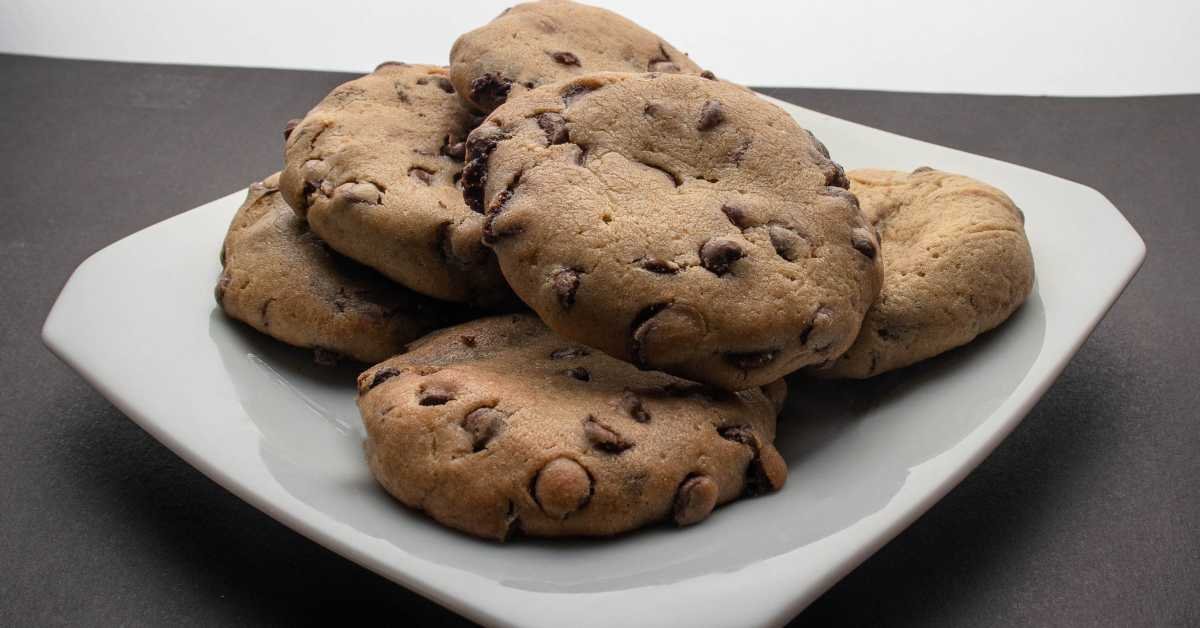
This one used to confuse me when I started baking. I thought sealing cookies while warm would trap moisture and keep them soft.
But warm storage actually ruins them.
What really happens
Warm cookies release steam → steam condenses inside the container → texture becomes soggy → then they harden faster.
So now I wait until the cookies are fully cooled.
My rule
If the bottom of a cookie still feels warm to the touch, I don’t store it yet.
What cooling does
- Keeps the chewiness stable
- Stops condensation
- Prevents soggy bottoms
- Avoids weird flavor changes
Letting cookies cool first is like drying produce before storing it, similar to how I treat apples in my clever ideas that keep cut apples fresh for longer. If moisture hits too early, things go wrong.
3. I Store Cookies in a Proper Airtight Container (Not Zip Bags Alone)
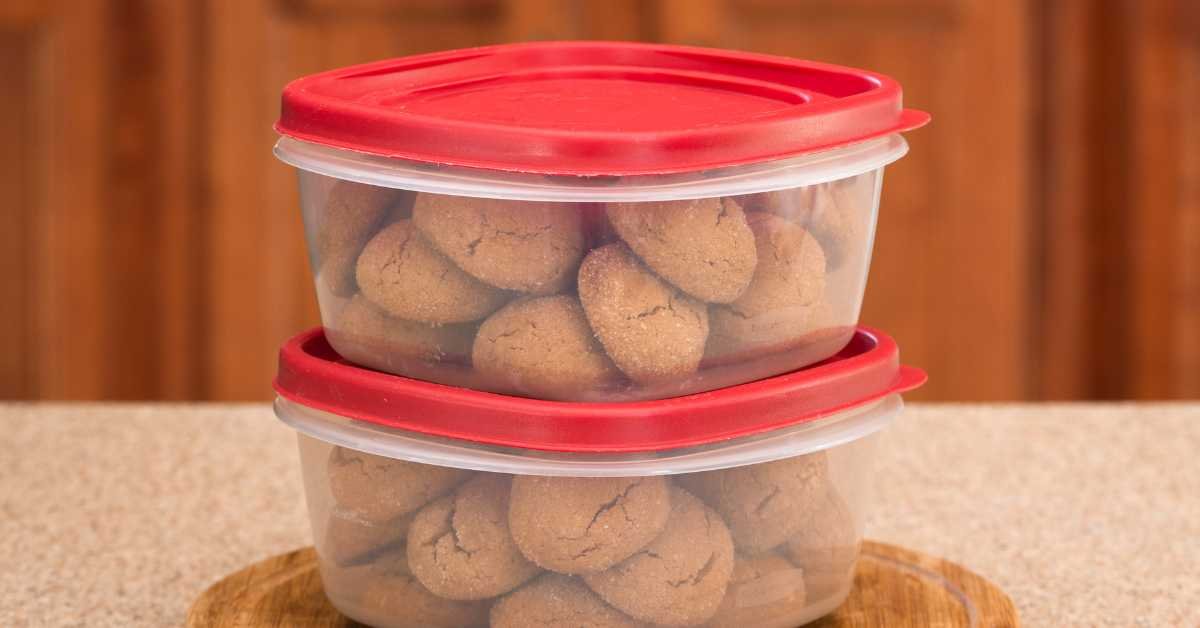
Zip bags are good for snacks, but when it comes to keeping cookies soft, they don’t seal tightly enough.
Air creeps in slowly, and that’s all it takes for cookies to dry out.
So I use:
- Premium airtight cookie containers
- Locking-lid storage boxes
- Glass jars with silicone-sealed lids
Why do these work better?
They control airflow perfectly. No slow drying, no stale taste, no flavor loss.
One small thing
I never mix different cookie types in one box—soft cookies can soften crisp cookies, and crisp cookies can dry out chewy ones.
When you’re storing different kinds of foods together, the same rule applies—like when I store lettuce separately to keep it crisp longer in simple tips that help lettuce stay crisp all week.
Cookies behave the same way: don’t mix textures.
4. I Use Parchment Paper Layers to Keep Cookies From Sticking and Drying
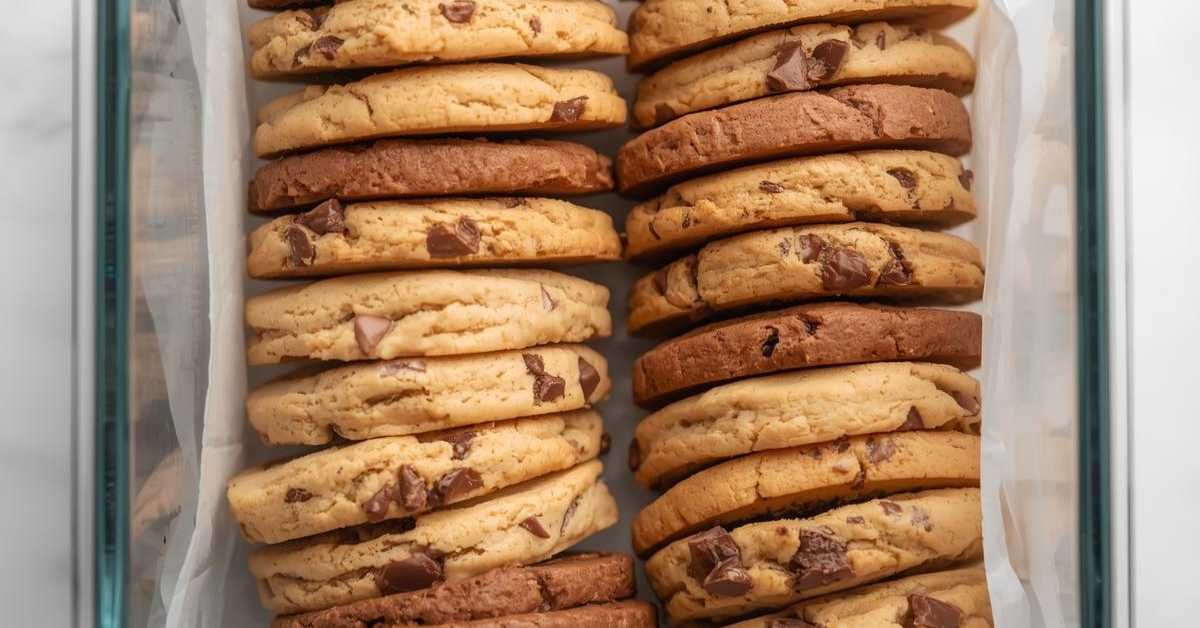
Stacking cookies on top of each other without a barrier makes the surface dry unevenly.
It also makes soft cookies stick together, especially if they contain melted chocolate or soft centers.
What I do
- Put a parchment circle at the bottom of the container.
- Add a single cookie layer.
- Add another parchment piece.
- Continue stacking.
Why this helps
- Protects delicate tops
- Keeps the shape intact
- Controls moisture distribution
- Prevents sticking to the lid or each other
This is really helpful for bakery-style thick cookies, because their tops crack slightly and can lose tenderness quickly.
5. I Add a Tiny Piece of Brown Sugar in the Container (My Backup Softness Trick)
Bread is my No.1 trick, but when I don’t want bread scent near my cookies, I use a small piece of brown sugar in a tiny breathable wrap.
How I wrap it
- Place 1–2 teaspoons of brown sugar in a small piece of parchment.
- Fold it loosely (not sealed).
- Put it inside the cookie container.
Why this works
Brown sugar naturally holds moisture—so it slows down how fast the cookies dry out.
Works best for
- Sugar cookies
- Shortbread
- Thumbprint cookies
- Spice cookies
It’s the same idea I use in keeping tomatoes flavorful (moisture + airflow balance), which I talk about in quick ideas to keep tomatoes flavorful for longer.
Controlling micro-moisture is everything.
6. I Freeze Cookies When I Bake Big Batches (Freezing Keeps Them Soft Perfectly)
Whenever I bake a large batch, freezing is honestly the best thing.
The cookies stay soft, fresh, and taste exactly like day one when thawed.
How I freeze cookies
- Let all cookies cool completely.
- Place them on a tray lined with parchment and freeze for 1 hour.
- Move them into freezer-safe airtight bags or containers.
- Label and date.
Why flash-freezing first
It stops them from sticking together later.
Thawing
Just leave a cookie at room temperature for 10–15 minutes.
Chewy cookies, soft-bake cookies, and peanut butter cookies thaw perfectly.
Bonus
Frozen cookies retain flavor soooo much better than cookies left in a loose container.
And freezing works for many foods too—like I’ve explained in smart ways to freeze milk without ruining the texture.
The method doesn’t matter; what matters is preventing freezer burn and locking in moisture.
7. I Never Store Cookies in the Fridge (It Dries Them Every Time)
A lot of people refrigerate cookies, thinking it extends their life.
But the fridge kills cookie softness.
The cold air pulls moisture from the cookie crumb extremely fast. Even soft chocolate chip cookies turn stiff and stale.
Instead, I do this
- Keep cookies at room temperature for up to 3 days.
- Freeze anything beyond that.
Only exception
Cookies with cream cheese frosting or perishable fillings—those need the fridge.
But in that case, I wrap each cookie in food-safe wrap so the cold air can’t dry out the surface.
Why this matters
- Fridge = dryness
- Freezer = freshness
- Room temp = perfect for soft cookies
Same rule I use for bread too, and why I talked about it in clever fixes to help bread stay soft for days.
Extra Softness Tips I Use Often
These aren’t part of the main seven, but I do them all the time because they make a real difference.
Underbake by one minute
Most cookies stay soft longer when you underbake slightly.
They finish setting while they cool.
Don’t store warm cookies ever
Warm air = condensation = weird texture.
Keep cookies away from strong-smelling foods
Cookies pick up fridge or pantry smells fast, especially vanilla cookies.
Add mix-ins that retain moisture
Brown sugar, molasses, and certain nut butters naturally keep cookies softer longer.
Store chocolate chip cookies separately
Chocolate releases the smell into delicate cookies.
Use the same moisture logic you’d use for produce
Just like apples and berries, cookies dry because of airflow and exposure—same pattern, different food.
How I Choose Which Softness Method to Use
Depending on the type of cookie, I use different strategies:
- If the cookies are soft and chewy: Airtight container + bread slice
- If I baked crisp-edged cookies: Parchment layers + airtight container
- If I baked for the whole week: Freeze half immediately
- If cookies have fillings or melted chocolate: Use parchment layers so nothing sticks
- If I need cookies soft for a party later: Freeze and thaw the day of
- If I want the simplest setup: Airtight container + full cooling
Once you understand that cookies dry out mostly because of airflow and moisture balance, the solution becomes super simple: block the air, trap the moisture, store them right.
Conclusion
After ruining so many batches over the years, these little habits are the only things that keep my cookies soft for days without turning crumbly or stale.
Once I started storing them in airtight containers, letting them cool properly, adding a moisture helper like bread or brown sugar, and freezing extras the right way… I never dealt with hard cookies again.
And the best feeling is opening the container the next day, and the cookies still smell fresh, feel soft when you press lightly in the center, and taste the same as the day I baked them.
It’s really just about blocking airflow and keeping the moisture where it belongs.
FAQs
How long can freshly baked cookies stay soft when stored correctly?
Usually 2–4 days, depending on the cookie type.
Chewy cookies and cookies with brown sugar tend to stay soft even longer if you store them airtight with a moisture helper.
Should I refrigerate cookies to keep them soft?
No, the fridge dries cookies super fast. It pulls moisture straight out of the crumb.
Room temperature or freezer is always better, unless the cookies have perishable fillings.
What should I do if my cookies have already turned a bit hard?
I just warm them in the microwave for 6–8 seconds with a damp towel nearby.
The steam softens them instantly and makes them taste fresh again.
Is freezing cookies really better than refrigerating them?
Yes, freezing keeps cookies soft way longer because it locks moisture inside.
When thawed, they taste like they were baked the same day — especially chocolate chip, oatmeal, and peanut butter cookies.
I’m a self-taught home cook who turns everyday ingredients into comforting, café-style recipes. I test everything in my own kitchen (sometimes more than once), tweak flavors how I like them, and share only what I actually enjoy.
Most of my recipes are chocolate-based or have a creative twist, and I keep them preservative-free, beginner-friendly, and fun to make.
If you love cozy drinks, healthier desserts, or bold flavor combos — you’re in the right place. [Read full story]