
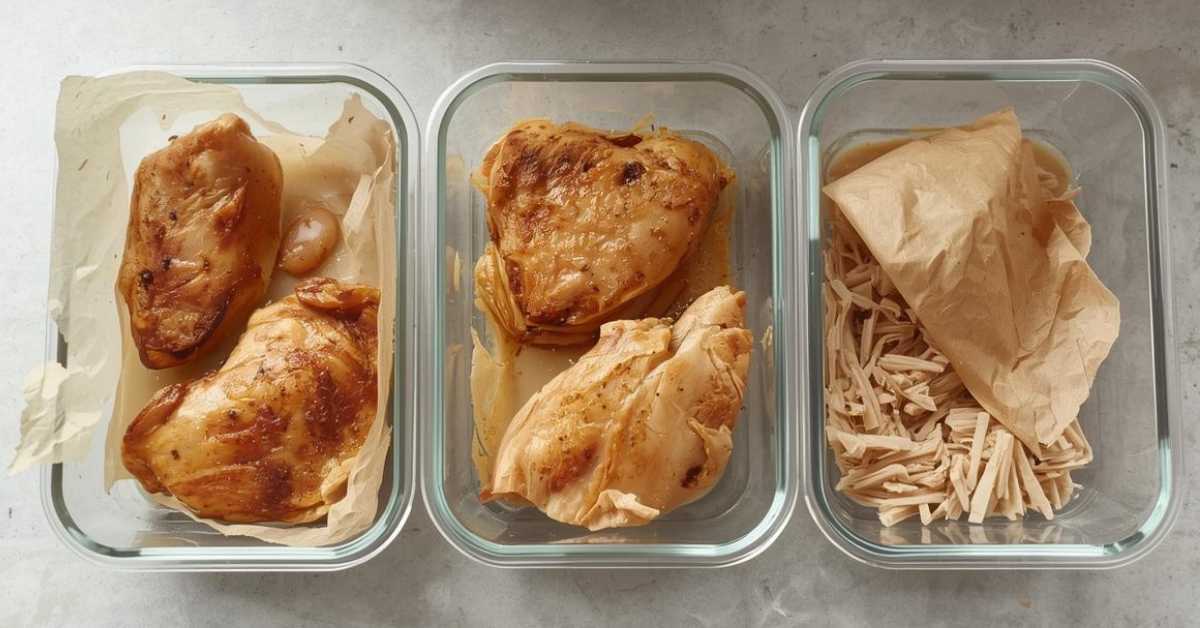
When you’re doing weekly meal prep, the one thing you really don’t want is cooked chicken turning dry, stringy, or—worst—spoiling before you even get to eat it.
The simple thing is this: If you cool it properly, store it in the right airtight setup, control moisture, and avoid the common fridge mistakes, cooked chicken will easily stay fresh, tender, and food-safe for 3 to 4 days.
These are the exact seven tricks I follow every week when I batch-cook chicken breasts, thighs, shredded chicken, or even rotisserie leftovers.
And they will help you protect both flavor and food safety—especially if you rely on meal prep for weight-loss diets, high-protein plans, or busy work weeks.
1. Cool the Chicken the Right Way Before Storing (This Step Prevents Bacteria Growth)
Most people just throw hot chicken straight into a container and rush it into the fridge—but that’s the fastest way to trap heat, create condensation, and encourage bacterial growth.
You want to cool cooked chicken fast, but not in a way that dries it out.
Here’s exactly how I do it:
- Spread the cooked chicken pieces out on a plate or tray
- Leave them at room temperature for 15 to 20 minutes (no longer)
- Let steam escape completely
- Then transfer to airtight storage
The key is controlled cooling. You don’t want the chicken sitting out for 1–2 hours.
But cooling it properly keeps the texture moist and avoids that “wet sponge” feel inside containers.
This is similar to how I avoid moisture buildup when storing delicate foods. Even something like keeping fresh berries or sliced apples requires proper airflow and moisture control.
Note: Cooling correctly is the first “food safety zone” that protects your chicken all week.
2. Use the Right Airtight Storage (Not Everything Works for Cooked Chicken)

You’ll be surprised how many meal preppers store chicken in containers that are too deep, too big, or not sealed properly.
These just trap steam and dry the chicken out.
Choose containers that are:
- Shallow (chicken cools faster, stays juicier)
- Airtight
- BPA-free or glass meal-prep boxes
- Clear (so you can see freshness easily)
I never store all the cooked chicken in one giant container.
I portion it out into individual airtight meal-prep boxes. It keeps everything fresher and safer.
Think of it like keeping cucumbers or herbs fresh—you always get better results when the storage container actually supports the food’s natural moisture.
Related read: Easy Tips to Keep Herbs Fresh for Nearly Two Weeks
Remember: Right-sized airtight containers keep chicken juicy instead of rubbery.
3. Add a Moisture-Saver Layer (The Trick That Keeps Chicken From Drying Out)
Cooked chicken dries quickly because the refrigerator pulls moisture out of lean protein.
But one little trick fixes that completely.
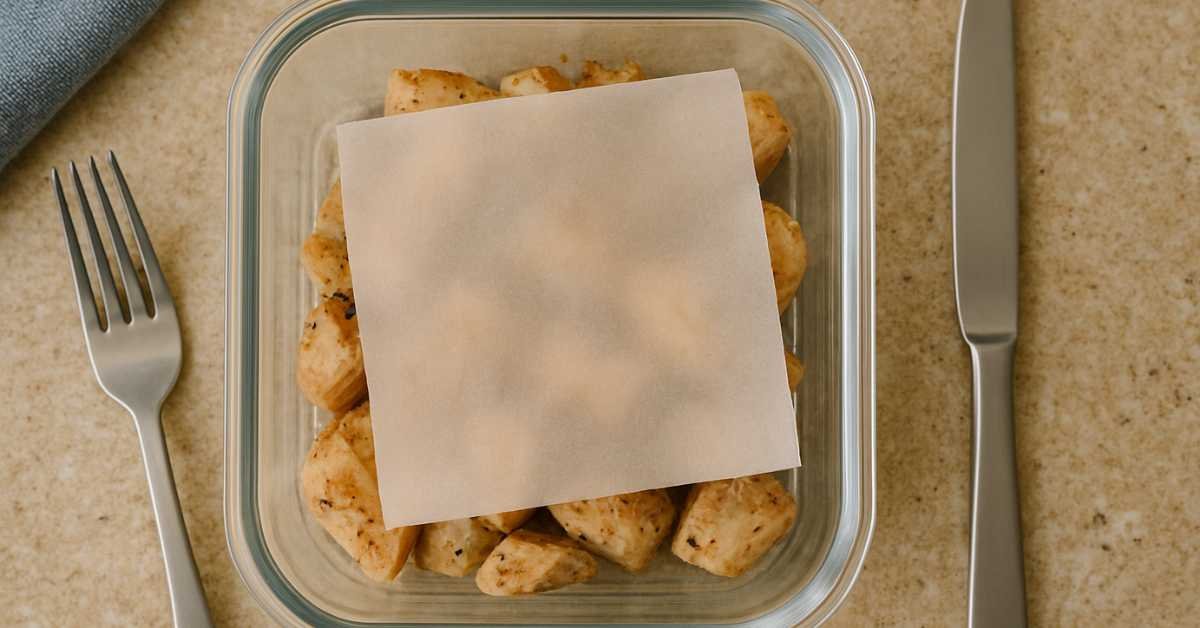
I place a tiny square of parchment paper or a thin silicone sheet directly over the chicken before sealing the lid.
This prevents air exposure and keeps moisture from escaping.
If you’re storing sliced or shredded chicken, this hack is even more important.
Bonus tip: A small drizzle of broth, olive oil, or even the chicken’s natural juices over the top also keeps it soft for days. Just don’t overdo it—too much liquid encourages sogginess.
Note: A simple parchment layer stops dryness before it even starts.
4. Keep Cooked Chicken in the Correct Fridge Zone
You can have the best containers in the world, but if you store chicken in the wrong part of the fridge, it will spoil faster.
Here’s exactly where cooked chicken belongs:
- Middle shelf, not the door
- Away from raw foods
- Not near strong odors
- Away from the coldest back vents (prevents hardening)
The fridge door is one of the worst places to keep meal-prepped chicken because it’s constantly exposed to temperature swings every time someone opens the door.
If you’ve ever wondered why berries or leafy herbs spoil faster in some fridge spots, it’s because the temperature zones matter way more than people think.
Related read: Helpful Methods to Keep Avocados Fresh After Cutting
Tip: Storing chicken in the wrong fridge zone shortens its life by 1–2 days.
5. Freeze Portions Correctly If Storing Chicken for Longer Than 4 Days
If you plan to store cooked chicken beyond the 3–4-day safe window, freezing is your best option—but only if you freeze it the right way.
Here’s how to freeze cooked chicken without ruining its texture:
- Portion out the chicken (don’t freeze a huge lump)
- Wrap portions in parchment paper
- Place inside freezer-safe bags
- Push air out completely
- Label with date
- Freeze for up to 3 months
When thawing, use:
- Refrigerator thawing (best)
- Microwave only for immediate reheating
Never put frozen chicken straight on the counter to thaw—that’s a food safety risk.
You’d be surprised how many foods freeze perfectly with the right process, like grapes or berries.
Related read: Simple Ideas for Freezing Grapes Perfectly for Snacking
Pro tip: Freezing is fine—but only when portioned, wrapped, and sealed correctly.
6. Don’t Put Hot Chicken With Other Meal-Prep Foods (Common Meal-Prep Mistake)
Many people pack their entire weekly meals at once—rice, veggies, sauces, and hot chicken all in one container.
But mixing hot and cold foods destroys freshness and creates a risk of bacteria.
What I personally do:
- Store chicken separately
- Keep rice or grains separate
- Keep sauces separate
- Assemble meals right before eating
This stops cross-moisture, keeps textures perfect, and makes reheating easier.
Think of it the same way you treat ingredients when storing produce.
For example, when keeping tomatoes fresh, you keep them separate to avoid early spoilage.
Related read: Quick Ideas to Keep Tomatoes Flavorful for Longer
Tip: Never pack hot chicken with ready-to-eat veggies or sauces.
7. Reheat Cooked Chicken the Smart Way (Matters for Both Flavor & Food Safety)
This is the final step that most people never think about, but reheating incorrectly is why meal-prepped chicken often turns rubbery, dry, or stringy.
Here’s exactly how to reheat cooked chicken so it stays tender:
Option 1: Microwave (but with moisture protection)
- Add 1–2 tbsp broth or water
- Cover the container loosely
- Heat in short bursts
- Let it rest for 1 minute before eating
Option 2: Stovetop (best for shredded or diced chicken)
- Add a splash of broth or olive oil
- Heat on low
- Stir occasionally
Option 3: Oven (best for larger pieces)
- Cover the chicken with foil
- Add moisture under the foil
- Heat at low temperature
You’ll notice the texture difference immediately when you reheat the right way.
Moisture protection is the same key you use when storing other foods—like lettuce or herbs—so they don’t wilt quickly.
Remember: Reheating with moisture = tender chicken, not rubber chicken.
Extra Tips That Make a Big Difference
Store Only What You Can Eat Safely
Even with perfect storage, cooked chicken has limits.
- Safe fridge life: 3–4 days
- Safe freezer life: up to 90 days
Use Minimal Seasoning Before Storing
Some seasonings (like lemon juice) break down protein faster.
Add bold flavors during reheating, not before storing.
Shred Chicken for Better Freezer Results
Shredded chicken freezes and reheats better than whole pieces.
Keep Chicken Away From Moisture-Heavy Foods
Veggies release water. And chicken absorbs that water; therefore, you need to keep them separate until serving.
Use Meal-Prep Containers With Dividers
These prevent cross-texture issues—especially for saucy chicken dishes.
Quick Summary (So You Always Remember the Core Steps)
Just follow these:
- Cool chicken properly
- Store in shallow airtight containers
- Add a moisture-protecting layer
- Use the right fridge zone
- Freeze correctly for long-term prep
- Keep chicken separate from other foods
- Reheat with moisture
These seven tricks will keep your cooked chicken fresh, juicy, and completely safe for meal prep.
Conclusion
Storing cooked chicken for meal prep doesn’t need to feel complicated, and if you start following these small habits, your chicken will stay tender, flavorful, and safe all week long.
The whole point of meal prep is to make your week easier—not to worry about whether your food will dry out, get soggy, or spoil too quickly.
These seven tricks just help you keep everything consistent: cool it the right way, portion it properly, protect moisture, and store it in the correct fridge zone.
Now you’ve got a simple system that works whether you prep chicken breasts, thighs, shredded meat, or even rotisserie leftovers.
You have to follow these steps that I’ve discussed, and your chicken will taste just as good on day three as it did when you first cooked it.
FAQs
How long can I keep cooked chicken safe in the fridge for meal prep?
If you store your cooked chicken in an airtight meal prep container, your rice will stay safe for 3 to 4 days.
After that, they might get bacterial growth, though the rice will still look fine. However, if you need it for longer, you should freeze it in small portions.
Why does cooked chicken get dry in the fridge?
It happens because the refrigerator constantly pulls moisture out of foods.
Without a moisture barrier—like parchment paper, broth, or airtight storage—the chicken loses natural juices and becomes stringy.
Using a moisture-protection layer prevents that dryness.
Should I store chicken whole or sliced for meal prep?
If you’re planning to reheat it later, sliced or shredded chicken usually reheats better and stays softer.
Larger pieces tend to dry out faster unless you cover them with broth or reheat them very gently.
Is it okay to store cooked chicken with vegetables or rice in the same container?
You can, but it’s not ideal. Mixing everything too early can cause moisture transfer, soggy textures, and uneven reheating.
If you want to keep it fresh, you should keep the chicken separate. And later combine it with rice or vegetables right before eating.
I’m a self-taught home cook who turns everyday ingredients into comforting, café-style recipes. I test everything in my own kitchen (sometimes more than once), tweak flavors how I like them, and share only what I actually enjoy.
Most of my recipes are chocolate-based or have a creative twist, and I keep them preservative-free, beginner-friendly, and fun to make.
If you love cozy drinks, healthier desserts, or bold flavor combos — you’re in the right place. [Read full story]