
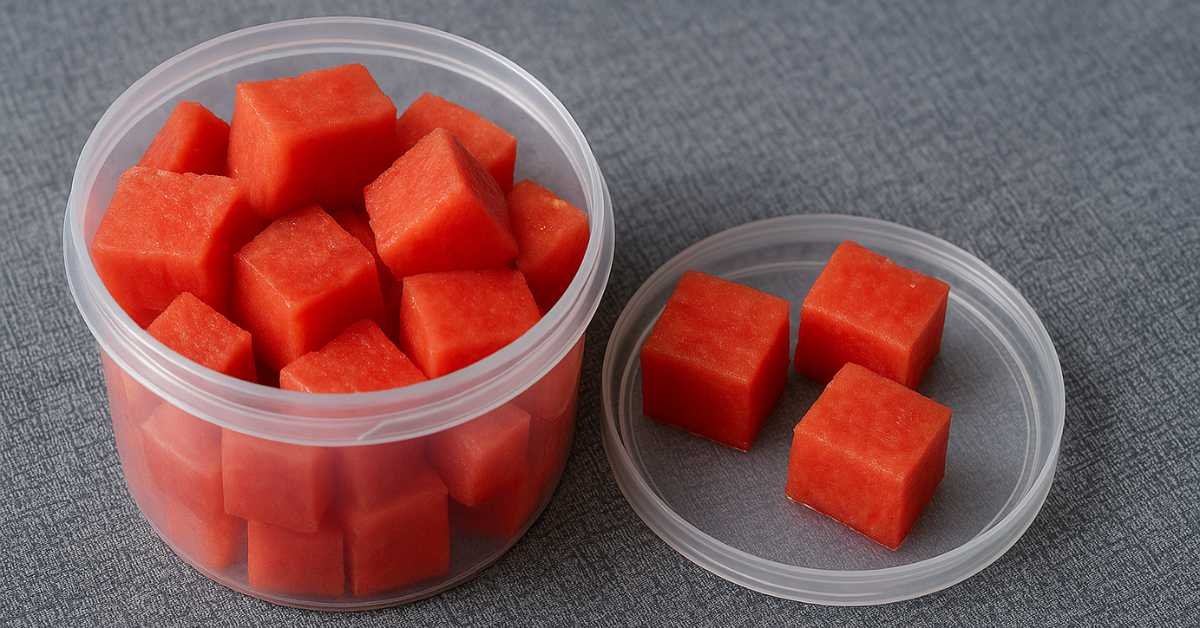
Sliced watermelon goes downhill faster than almost any fruit. One minute it’s firm and bursting with sweetness, and the next morning it’s watery, grainy, and somehow tastes like the entire fridge.
But once you figure out how sliced watermelon behaves — how quickly it loses moisture, how fast it absorbs odors, how temperature messes with its texture — you can actually keep it tasting fresh for days without doing anything dramatic.
I’m sharing the six little habits I use every single time.
And every one of them directly affects how crisp and juicy it stays.
1. I Slice it Cold, Not Warm — this alone keeps it crisp longer
A watermelon that’s cut when warm collapses fast. When the fruit sits at room temperature, the fibers soften, and the moment your knife touches it, you lose half the juice into the container.
That’s why warm-cut fruit always tastes older by the next morning.
So the first thing I always do is chill the whole watermelon before cutting. Even 6–8 hours in the refrigerator gives you tighter, firmer flesh.
Why cutting it cold makes a huge difference:
- It releases far less liquid
- sweetness stays concentrated
- The pieces don’t “bleed“ into each other
- The surface stays smooth, not rough
It works the same way as when you store homegrown produce properly — temperature control stops moisture loss before it even starts.
2. I Drain the First Juice Right Away — never let slices sit in that liquid
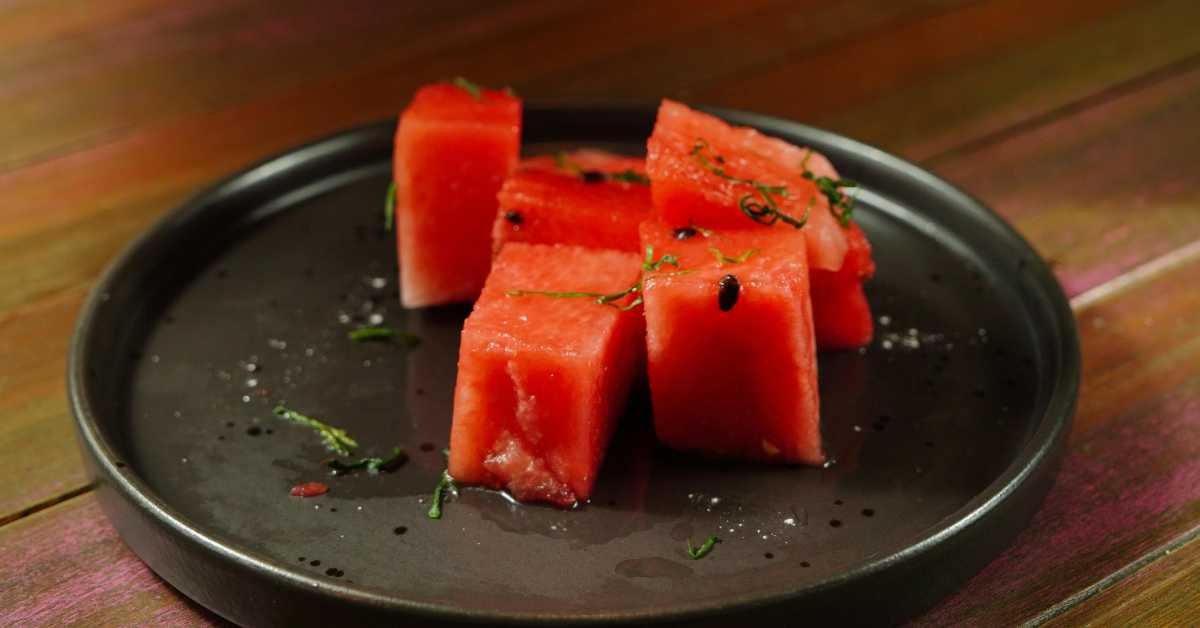
Every time you cut watermelon, the first container fills with juice at the bottom within minutes. Leaving those pieces sitting in that puddle guarantees mushy corners the next day.
I always do a quick drain after the first 15–20 minutes.
Then I gently tilt the container once more after an hour if more liquid collects.
This tiny step protects the texture longer than most people expect.
What sitting in juice does to the slices:
- makes edges break apart
- waters down the flavor
- encourages bacterial growth
- creates that soggy, translucent look
Even premium airtight containers can’t stop breakdown if the slices are drowning in their own liquid.
If you want to level this up… I sometimes slide a small raised tray at the bottom of the container so the slices sit above the juice.
It’s a simple hack used in commercial produce storage, the same concept behind elevated trays in high-end refrigerator organization systems and premium airtight food storage products, which keep moisture separated to prevent breakdown.
3. I Use Airtight Containers that Actually Seal — not the loose-lid ones
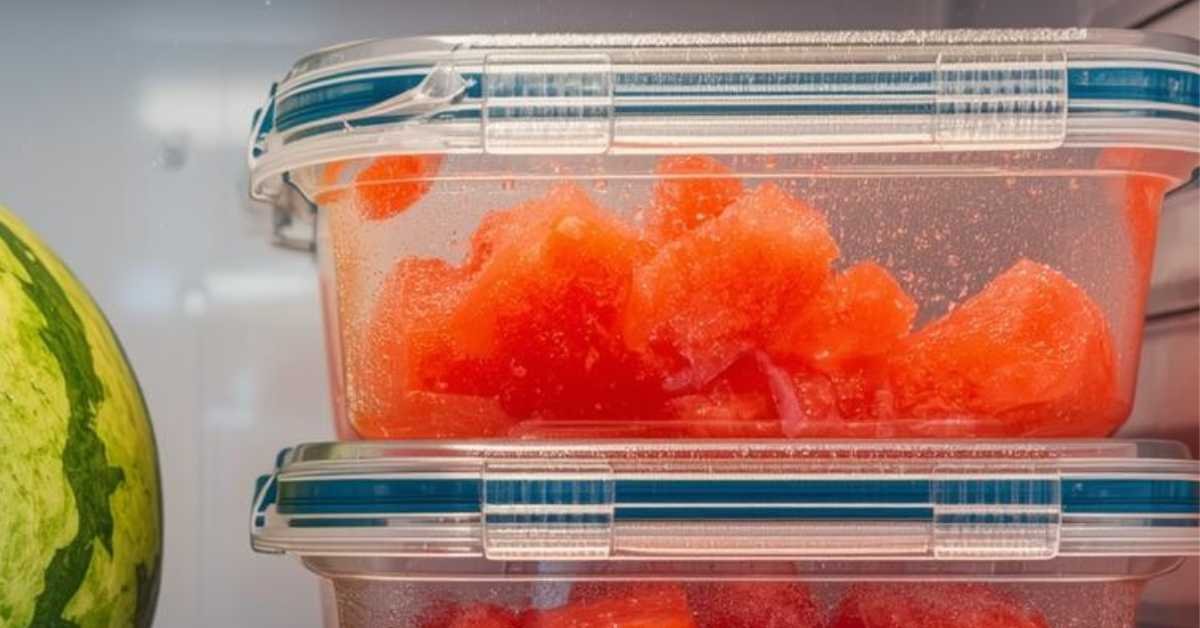
Most people think “airtight“ means any container with a lid. But sliced watermelon reacts badly to even a tiny bit of airflow.
If the seal isn’t tight, it dries out fast — especially near the edges.
So the only containers I use for watermelon are:
- Snap-lock glass containers
- Vacuum-seal produce storage boxes
- Premium BPA-free airtight containers
- Heavy-duty refrigerator-safe bins with gasket lids
The difference is massive. In a proper airtight container, watermelon stays juicy and sweet days longer and doesn’t absorb fridge odors.
In a loose-lid container, watermelon tastes stale by the next morning.
If you love prepping snacks ahead, airtight storage helps the same way it helps with herbs.
Watermelon may be different, but it still behaves like a moisture-loving plant once cut.
High-quality airtight containers also prevent oxidation, which is what causes the dull, pale spots on old slices.
4. I leave the Slices Large — small cubes dry out ridiculously fast
A lot of people don’t realize watermelon dries out through surface area exposure.
The smaller the cut → the more surface exposed → the faster it loses moisture.
That’s why snack-size cubes always taste old by the next day.
So here’s what I do instead:
I cut the watermelon into large wedges or thick chunks and store them like that. When I want smaller pieces, I cut them directly from the big chunk I’m eating that day.
Large pieces stay juicy because only a small portion of the flesh is exposed.
It’s the same reason fruits and vegetables store longer when kept whole. And it works for watermelon even more because its water content is so high.
If you love ready-to-eat snack sizes for kids, just cut them fresh from the large stored chunk. That way, you get the convenience without the next-day sogginess.
This method becomes especially useful in summer when humidity jumps.
5. I Control Condensation Using a Simple Dry Barrier — but never touching the fruit
Condensation is the silent killer of sliced watermelon.
Even if the container is airtight, moisture collects on the inside of the lid and drips right back onto the slices. Those drops start softening the top pieces before anything else.
So here’s what I do:
I place a clean, dry paper towel on the underside of the lid — not touching the fruit — to catch that condensation.
This tiny barrier stops:
- Dripping water
- Texture breakdown
- Soggy spots at the top
- Surface discoloration
It acts like a humidity regulator, almost the same as those moisture-control pads used in professional food storage systems, premium refrigerator inserts, and high-end produce preservation tools that extend shelf life.
The key is making sure the towel doesn’t touch the watermelon. If it touches, it pulls moisture out of the fruit instead of absorbing condensation.
This step works whether you store slices in big containers, stacked bins, or vacuum-seal boxes.
6. I Store Watermelon in the Coldest Stable Zone of the Fridge — not the fridge door
This is one of the biggest hidden reasons watermelon turns mushy fast.
The fridge door is constantly opening and closing, creating huge temperature swings. Watermelon hates temperature fluctuations — they break down the structure of its fibers.
So I always place sliced watermelon:
- In the back lower shelf
- Not near the light
- Not near warm leftovers
- Not stacked under anything warm
- Not near the door
The coldest stable zone keeps the watermelon texture tight, slows bacteria, and preserves sweetness longer.
If your fridge runs warm or inconsistent, consider using premium refrigerator organization solutions or temperature-stable food preservation bins, especially when storing high-moisture produce like watermelon.
Good equipment genuinely extends shelf life.
Extra habits that help even more (but not part of the 6 tips)
These are small habits I automatically do because they keep sliced watermelon tasting fresh significantly longer:
- I never mix watermelon with other fruits in the same container
- I don’t salt sliced watermelon until serving time
- I use long, clean cuts — sawing bruises the fruit
- I avoid stacking slices too tightly
- I freeze leftovers for smoothies before they turn watery
These aren’t “main methods”, but doing them saves texture and sweetness.
Conclusion
Keeping sliced watermelon tasting fresh isn’t luck — it’s just understanding how quickly moisture, airflow, and temperature change its texture.
Once you start cutting it cold, draining extra juice, using real airtight containers, storing larger pieces, controlling condensation, and placing it in the coldest stable part of the fridge, the difference is honestly wild.
My slices stay juicy, sweet, and crisp days longer, and I don’t end up throwing out half-mushy containers anymore.
And if you pair these habits with good-quality airtight food storage containers, refrigerator-organization tools, or produce-preservation systems, you’ll stretch every watermelon way farther than before. Simple tweaks, huge payoff.
FAQs
How long can sliced watermelon actually stay fresh in the fridge with these methods?
My watermelon stays fresh for around 3–5 days (firm and sweet), sometimes even longer if the container is airtight and condensation is controlled.
Watermelon stored in premium airtight containers or vacuum-seal produce boxes often lasts on the longer end because moisture stays balanced.
Why does my sliced watermelon turn grainy so fast?
Graininess happens from temperature swings and air exposure. If it’s stored near the fridge door or in a lid that doesn’t seal well, the fruit dries from the edges inward.
Cut it cold, use a real airtight food-grade container, and keep it in the coldest stable zone — it prevents that breakdown.
If I freeze leftover sliced watermelon, will it ruin the texture?
Nope, but frozen watermelon won’t stay crisp — the texture softens. It’s great for smoothies, cold drinks, frozen desserts, and even blended cocktails.
Freezing works best if you use freezer-safe storage bags or vacuum-seal freezer containers so the flavor stays clean and doesn’t absorb odors.

I’m a self-taught home cook who turns everyday ingredients into comforting, café-style recipes. I test everything in my own kitchen (sometimes more than once), tweak flavors how I like them, and share only what I actually enjoy.
Most of my recipes are chocolate-based or have a creative twist, and I keep them preservative-free, beginner-friendly, and fun to make.
If you love cozy drinks, healthier desserts, or bold flavor combos — you’re in the right place. [Read full story]